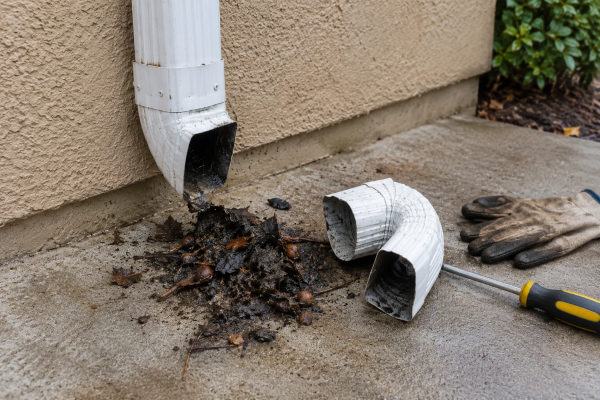

A clear downspout still causes trouble if it empties against the wall.
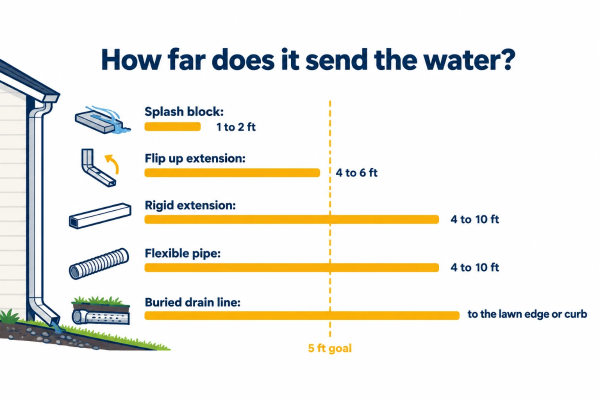
Blocks, add on pipes, and buried lines each carry rain a different distance.
Here is how downspout extensions compare, and which one suits your yard.
How Far Should Downspout Water Go?
At least 5 feet from the foundation for a surface outlet, and at least 10 feet for a line tied into an underground system. Those two numbers come straight from the federal energy agency’s building guide, which adds that any pipe you bury needs at least 5/8 inch of drop for every foot it travels (DOE Building America Solution Center).
The ground matters as much as the pipe. California’s residential code says the soil beside a home should drop at least 6 inches within the first 10 feet (CRC Section R401.3, via GoCodeBook). If your yard tilts back toward the house, no outlet will fix that alone.
Every Outlet Option Compared
Option | Typical reach | Upkeep | Best for |
|---|---|---|---|
Splash block | A foot or two | Reset after storms | Beds that already slope away |
Rigid extension | 4 to 10 feet | Low | Side yards and bark beds |
Flexible pipe | 4 to 10 feet | Ridges trap grit, sun makes it brittle | Quick, temporary fixes |
Roll out sleeve | Roughly one body length past the wall | Rips under foot traffic, packs with seed pods | A path you cross every morning |
Flip up extension | 4 to 6 feet | Hinge can leak | Lawns you mow |
Buried drain line | Out to the lawn edge or curb | A hose flush every year | Homes with concrete wrapped around the house |
Rain barrel or planted bed | Stays on your lot | Clean screens, overflow route | Water wise yards |
Splash Blocks: Simple, but Only on the Right Slope
Think of a splash block as a short ramp. It catches the falling water at the foot of the pipe and fans it out, so the stream lands on the ramp and not in a crater it carved in your mulch. It does not carry water far. On a bed that already falls away from the house, that is often enough. On flat ground, the water pools a foot from the wall and soaks right back toward the slab.
Blocks also drift. A gardener’s rake, a dog, or a hard storm can push one sideways, and then the downspout dumps straight onto bare soil. After each big rain, glance at every block and slide any stray ones back into line.
Surface Extensions: Rigid, Flexible, Roll Out and Flip Up
Rigid Extensions
A straight length of aluminum or vinyl downspout pipe, attached with an elbow, is the simplest add on that moves water a real distance. It lasts for years and does not clog easily. The catch is looks, and the fact that it sits on the ground where people walk.
Flexible Pipe
The ribbed, accordion style tube from the hardware store snaps onto the bottom elbow and curves wherever you point it, so most owners have it on in one trip outside. The ridges inside hold grit and seeds, and our summer sun makes the plastic stiff and cracked within a few seasons.
Roll Out Sleeves
A flat plastic sleeve unrolls when water fills it, then curls back up when it dries. They tuck away neatly but tear easily, and light rain may not push them open all the way.
Flip Up Extensions
A hinged section lifts out of the way for mowing, then drops back down. The hinge is the weak spot. If someone forgets to lower it before a storm, the water lands at the wall.
Buried Downspout Drain Lines
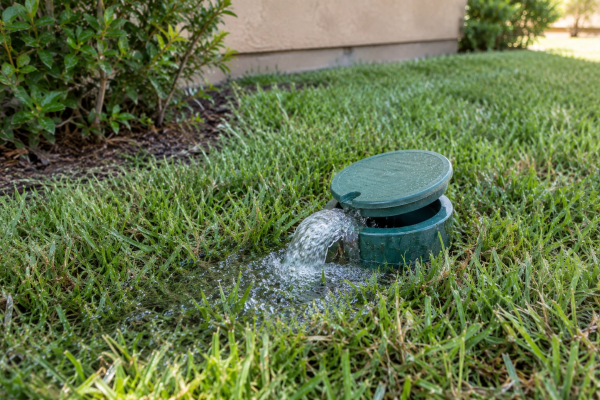
A buried line hides the pipe under the lawn and empties at a round pop up emitter or a curb outlet. It keeps walkways clear and makes mowing easy. It also clogs out of sight, needs a steady fall of at least 5/8 inch per foot to keep water moving, and takes the most work to install.
Before anyone digs, call 811. Roseville Electric says any type of digging requires a call, and the service is free (Roseville Electric). In California, drain work worth $1,000 or more in labor and materials must be done by a licensed contractor (CSLB). If a buried line already backs up, our guide on how to unclog a downspout covers clearing it.
Sending Water to Planted Beds or a Rain Barrel
The EPA suggests aiming downspouts at a planted area, while checking local rules and making sure the water will not cause harm somewhere else (EPA).
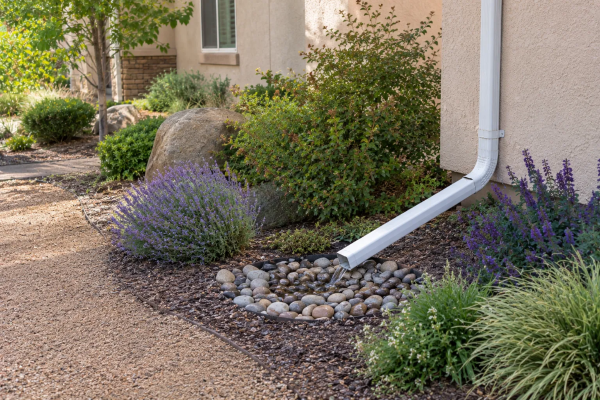
Many Roseville yards are trading lawn for water wise beds through the city’s Cash for Grass program, which offers a rebate for turf you replace (City of Roseville Rebates). If you convert, plan the downspouts at the same time. Run a short rigid extension out to a shallow basin of river rock or mulch at least 5 feet from the wall, so the rain soaks into the new bed instead of the soil beside the slab.
A rain barrel needs an overflow route too, the same as any of the downspout extensions above. When it fills in a winter storm, the extra water still has to land away from the house.
Which Option Fits Your Roseville Yard?
Your yard | Good fit | Why |
|---|---|---|
Narrow side yard in Westpark or Fiddyment Farm | Rigid extension or buried line | Little room, foot traffic to the trash cans |
Front lawn you mow | Flip up or buried line | Nothing to drag the mower around |
Lot that falls away, as on parts of Stoneridge | A simple block | The slope already carries the water |
New water wise bed | Rigid extension to a rock basin | Feeds the plants, spares the slab |
Concrete between the downspout and open dirt | Pipe in the ground | It slips beneath the slab work and pops up in the grass |
Older Cherry Glen home with bare downspouts | Start with rigid extensions | Simplest real fix, then reassess |
Keep Them Working
A good downspout clean out visit checks every outlet as part of the job, and the Roseville gutter maintenance calendar on this site shows the best months for each check.
When the Problem Is Bigger Than an Extension
If water still pools by the wall after you add an outlet, the issue may be the slope of the ground, a gutter with too little fall, or too few downspouts for the roof. Our guide to gutter drainage problems walks through each one. New cracks, sticking doors, or a slab that has shifted call for a licensed foundation professional.
Downspout Extension FAQs
Get a Downspout Check in Roseville
A good provider will clear every gutter and downspout, check where each one empties, and send photos with suggestions, from Sun City to Stoneridge. Learn more about downspout cleaning in Roseville, or start with the main page on Roseville gutter services.
Call (279) 278-7800.